
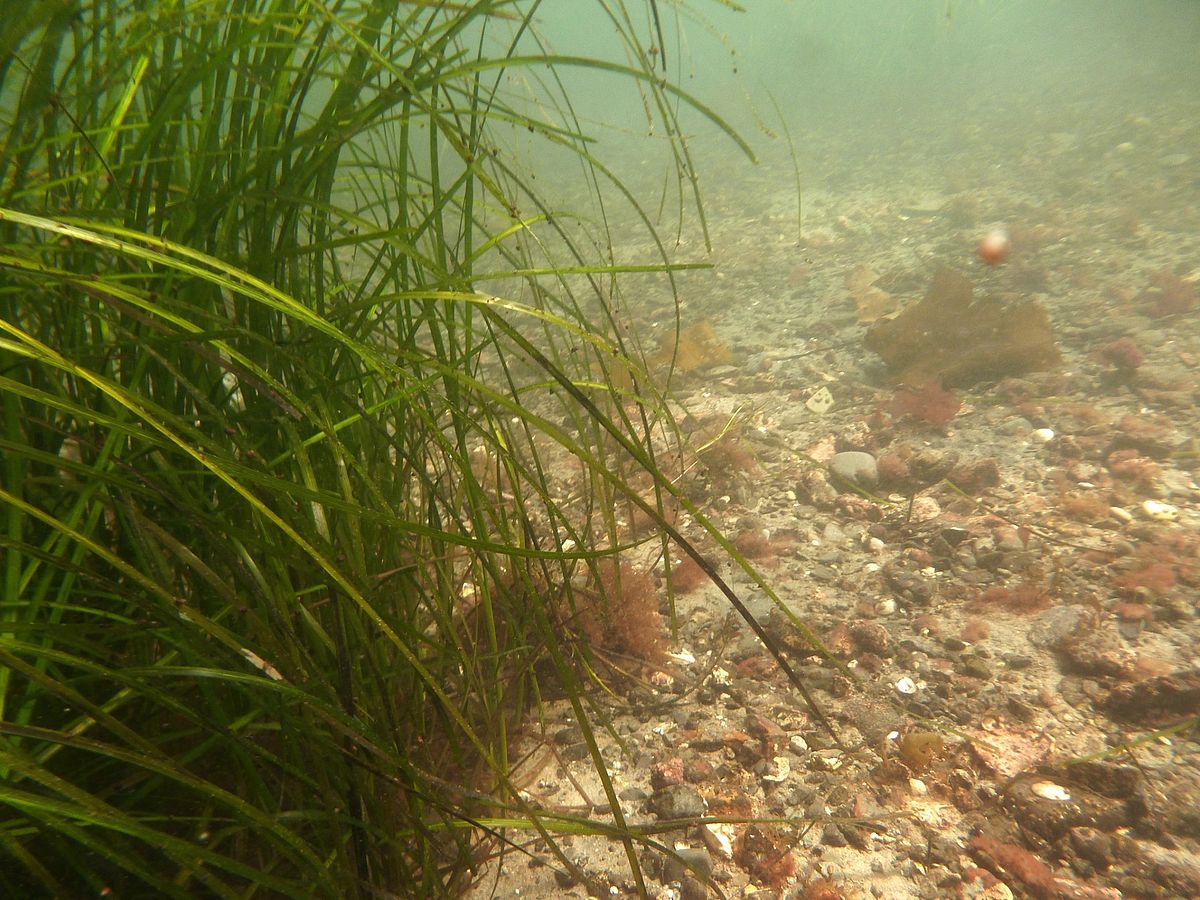
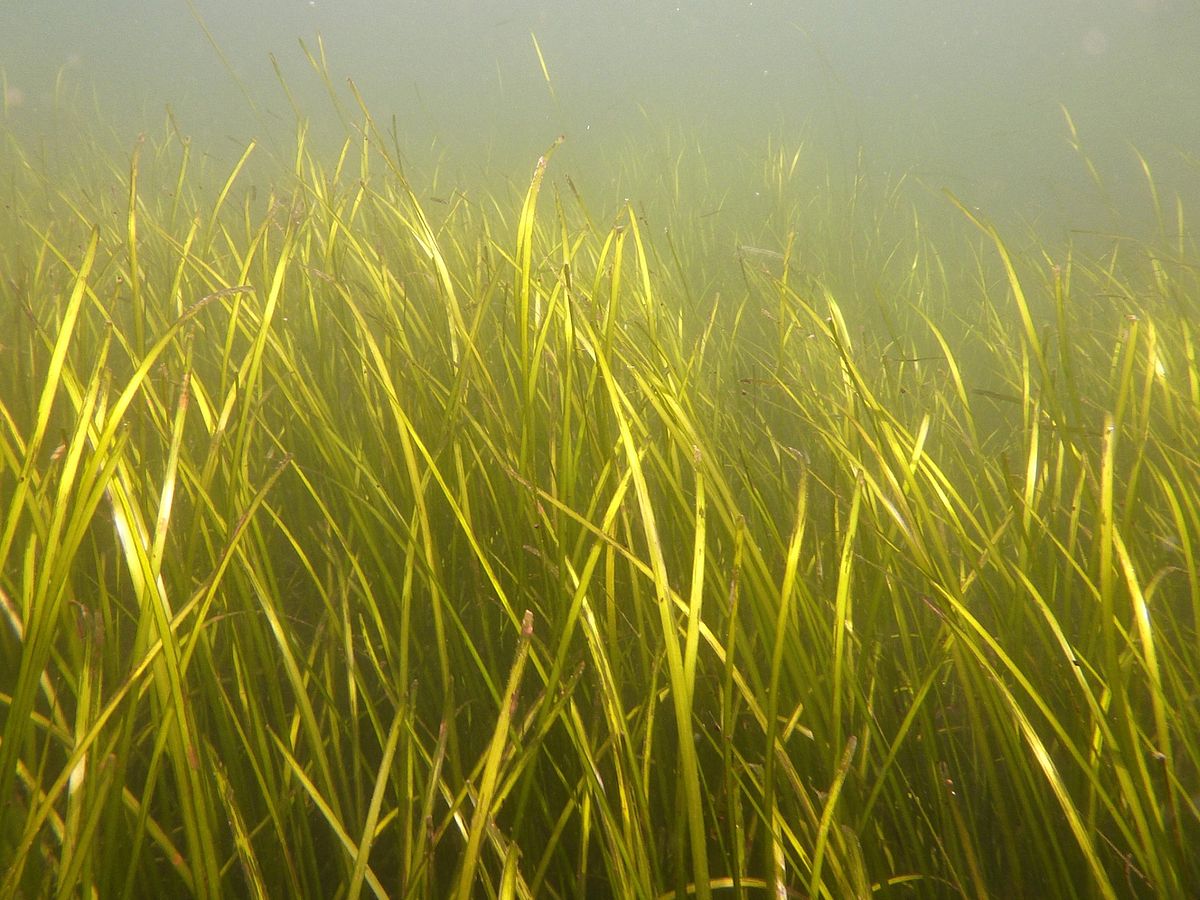
Eelgrass (Zostera marina) is a marine plant critical to coastal ecosystems. It supports commercial fisheries and plays an important role in resilience to climate change. Eel grass serves as a habitat for young fish and provides food and refuge for a variety of other species. It also aids in reducing shoreline erosion and improves water quality. According to Maine Department of Environmental Protection (DEP) in Southern Maine, eelgrass has declined by 75% since the early 2000s. This decline strongly correlates with the population surge of invasive European green crabs (Carcinus maenas) in New England. Scientists are now working to better understand and restore eelgrass habitats.
Our friends at The Wells Reserve’s Research team is currently partnering with Manomet Conservation Sciences and Casco Bay Estuary Partnership to study two different eelgrass beds: one right in our backyard of Kennebunk waters that is considered stable and healthy, and one in Casco Bay near Falmouth that has seen dramatic declines. The work is funded by a grant from the Maine Coastal and Marine Climate Funding initiative.
Research Scientist at Wells National Estuarine Research Reserve Ben Gutzler explained what is going on. “We’re working in Lords Cove next to Mother’s Beach, which has a really lush eelgrass bed. Our work there this past summer has focused on if, and how, invasive green crab abundances and movements may impact the eelgrass. We are using trapping surveys to monitor green crab abundances, paired with dive surveys of eelgrass density and height to understand the bed’s health.” The team has also been putting acoustic tags on some of the crabs and the lobsters caught. These tags talk to an array of acoustic receivers deployed in the cove and track the foraging, movement, and time green crabs and other crustaceans spend in the eel grass.
“When we pull the array (hopefully late October), we’ll send the data off for processing that will hopefully let us track how the crabs and lobsters use the space in the eelgrass bed. We are trying to see if there are any hotspots for their residence, then match that up with our measurements of grass health from our surveys,” Gutzler said.
Because the work at Wells National Estuarine Research is being done in tandem with identical surveys happening at another less abundant eel grass bed in Casco Bay, Gutzler said “The hypothesis was that green crabs might not have been as big a factor as expected, because they’d always seemed so ubiquitous. However, this summer, we’ve found relatively few green crabs at the Lords Cove site, where the eelgrass seems in great shape. The site in Casco Bay has patchy grass coverage and is also loaded with green crabs. So, maybe there is something to the idea that crabs are doing a lot of damage.”
Gutzler noted that many native crab species such as rock and Jonah crabs, as well as lobsters, are also found in eelgrass, which is also valuable information. “There’s less documentation than you’d expect in the scientific literature about how our native crustaceans are using eel grass, so I’m excited to dig into that a bit,” he said.
The Kennebunkport Conservation Trust and The Climate Initiative share a foundational and deeply rooted partnership with local environmental education initiatives such as the eel grass study, which plays a significant role in climate resilience. Eel grass is known to deter and reduce coastal erosion by holding soft sediments firmly in place. Eelgrass beds capture and trap moving particles from the water column, which promotes sediment buildup and strengthens the seabed over time, in addition to providing habitat for marine creatures.
The KCT is following this important work happening in our shared waters closely. Results of the study should be in by late fall, and we will update our members and supporters on the progress and findings of this important study.